Item of the Month From David Gray
World War Two Scrapbook
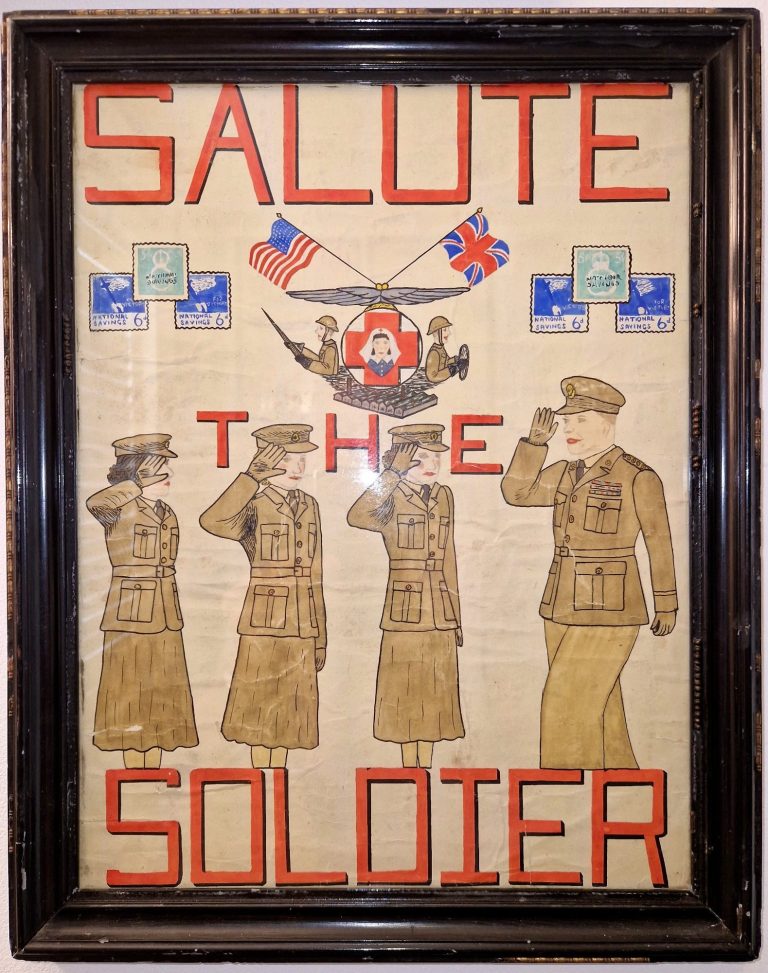
I recently acquired this scrapbook which was compiled by someone during the Second World War. I find it fascinating to imagine someone, maybe a child, maybe a housewife, or perhaps a man just returned from is duty in the Home Guard, sitting down at the table at home, the radio on with the blackout screens in place at the window, a copy of that day’s newspaper, scissors, glue and his scrapbook in front of him.
I have sixty-four scrapbooks from this era in my collection now and I am always looking for more. Apart from providing a fascinating insight into the minds of the ordinary people on the Home Front and what they felt was important, they are a never-ending source of ideas and information. Those compiled by children are fairly easy to recognise and feature a lot more of the ‘whimsical’ stories and pictures of animals (but not all). It can be very sad to see the harrowing stories crudely cut out and pasted in that children were having to come to terms with.
I have a set of twenty-six scrapbooks which were diligently compiled by a woman all the way though the war so that her husband who was away fighting would have a record of what had been happening on his return. Those books cover the period from October 2nd 1939 to April 6th 1946, (he did return).
This book, ‘Number 1’ on the cover, begins on August 29th 1939 and finishes on October 30th 1939. No doubt many others followed. The book is 6 inches by 8 inches and one inch thick. Some are simply exercise books with cuttings stuck in, others are large scrapbooks specifically sold for the purpose. Children often kept scrapbooks as part of their school work and these were often made from scratch, with brown paper pages and wallpaper covers.
One of the first cuttings in this book reads:
‘WAR
11 a.m., September 3rd, 1939.
Great Britain and France are at war with Germany. We now fight against the blackest tyranny that has ever held men in bondage. We fight to defend, and to restore, freedom and justice on earth.’
This must have been very frightening. We who look back across the years with all the hindsight available, don’t really understand how those people felt at that time. We can’t put ourselves into their shoes and sense their fear. It is one thing that I think we can never know, and these cuttings, I believe, were one way that people at the time dealt with the unknown future. Recording the passage of the war, keeping it in perspective and not allowing their imaginations to run away with them.